Home Holy Dhams Contact About
🙏 Tier 1 · Holy Dham
HeritagePilgrimageRam BhaktiSapta Puri

Ayodhya Dham

📍Ayodhya, Uttar Pradesh, India

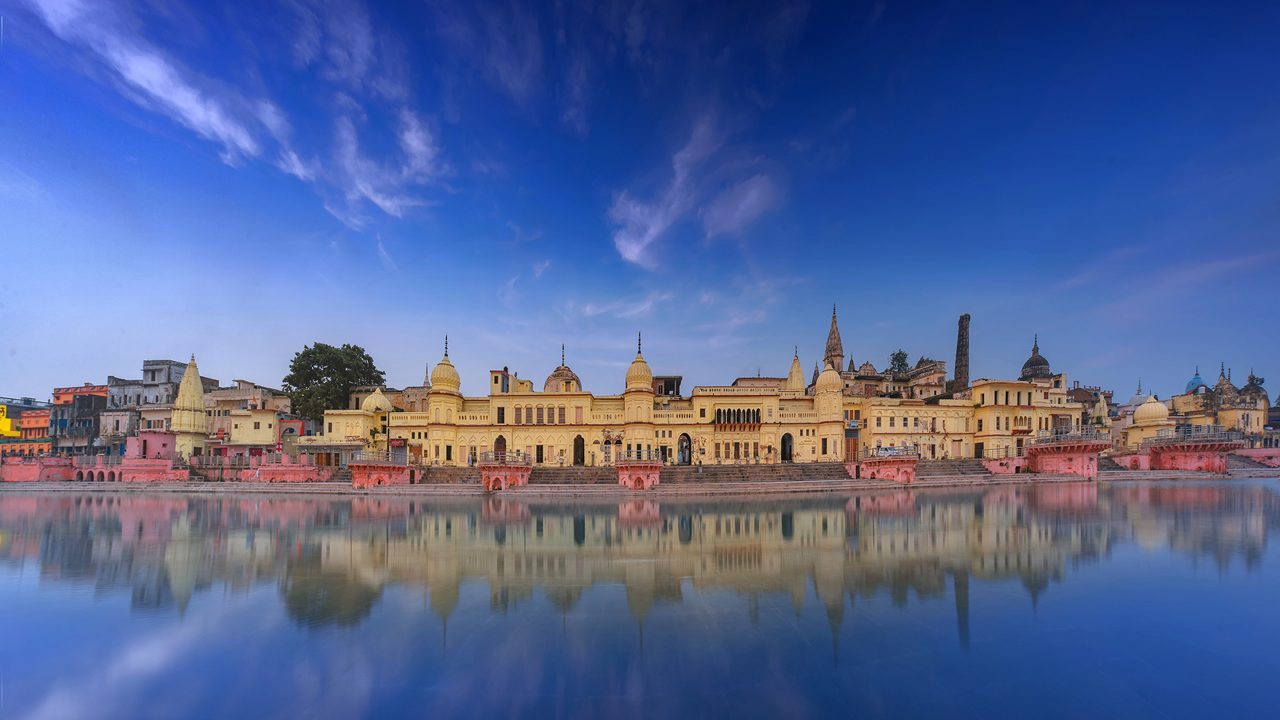
The sacred birthplace of Lord Rama, first of the Sapta Mokshapuris. Situated on the banks of River Saryu in Uttar Pradesh, Ayodhya is the eternal capital of the Ikshvaku dynasty.

Key Places 6
Key Spots 108
Key Points 47
👁️ 73 views

The Invincible City of Lord Rama

Ayodhya, derived from the Sanskrit a-yodhya meaning "invincible," is one of the most ancient and sacred cities in the world. Mentioned in the Atharvaveda as the unconquerable city of the gods, Ayodhya has been the spiritual beacon of Sanatana Dharma since time immemorial.

Sapta Mokshapuri

As proclaimed in the Garuda Purana: "Ayodhya Mathura Maya Kashi Kanchi Avantika, Puri Dwaravati chaiva saptaite mokshadayikah" — Ayodhya stands first among the seven cities that bestow liberation (moksha). A pilgrimage here is believed to free the soul from the cycle of birth and death.

Capital of the Ikshvaku Dynasty

According to the Ramayana, Ayodhya was established by Manu himself, taking a piece of Vaikuntha from Lord Narayana. It served as the magnificent capital of the Solar Dynasty (Surya Vansha) kings, including the great Raghu, Aja, Dasharatha, and the Supreme Lord Rama. The city is described as being shaped like a fish, spanning 12 yojanas in length and 3 yojanas in breadth.

Birthplace of Lord Rama

Lord Rama, the seventh avatara of Lord Vishnu, appeared here on the Navami tithi of Chaitra Shukla Paksha. He ruled the earth for eleven thousand years, establishing the ideal kingdom known as Ram Rajya. After His divine departure, the sacred tirthas, temples, kunds, and ghats of Ayodhya continue to radiate His spiritual presence.

Saryu River

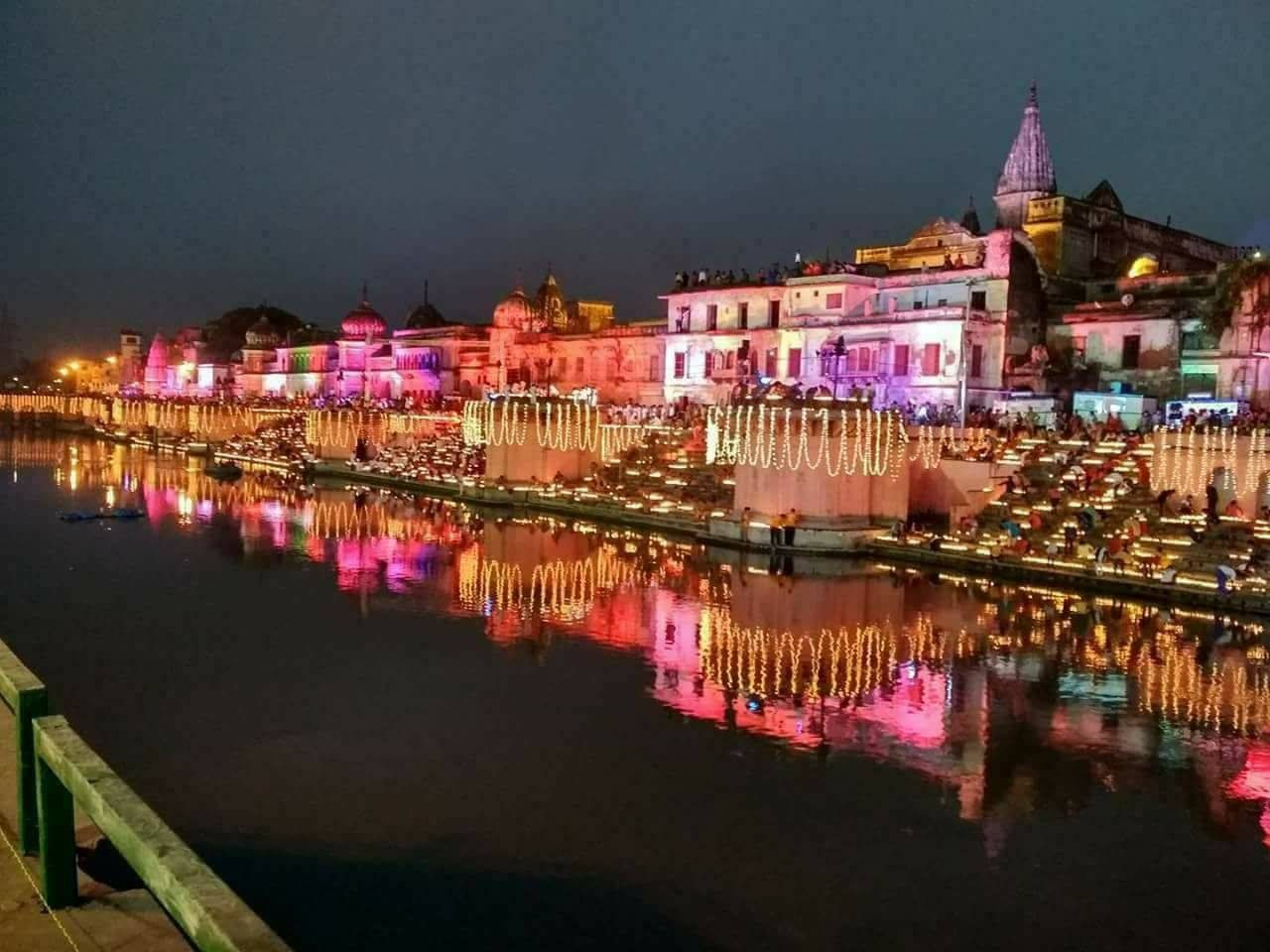
The holy Saryu (Sarayu) river flows along the northern boundary of Ayodhya. Bathing in Saryu is considered highly meritorious. The famous ghats — Ram Ki Paidi, Guptar Ghat, Swargdwar — are centers of daily worship and grand festivals. The Saryu is described in the Padma Purana as flowing from the divine realm of Vaikuntha itself.

Spiritual Heritage

With over 100 temples, numerous sacred kunds, ancient ghats, and the newly consecrated Ram Janmabhoomi Mandir (inaugurated January 2024), Ayodhya attracts millions of pilgrims annually. The city also holds deep significance for Jainism — five Tirthankaras (Rishabhanatha, Ajitanatha, Abhinandananatha, Sumatinatha, and Anantanatha) were born here.

🌤️ Best Time to Visit

October to March (pleasant weather). Ram Navami (Chaitra Shukla Navami) is the grandest festival.

🚗 How to Reach

By Air: Maharishi Valmiki Intl Airport (~8 km), Lucknow Airport (~135 km). By Rail: Ayodhya Dham Jn well-connected to Delhi, Lucknow, Varanasi. By Road: NH-27 to Lucknow (134 km), Varanasi (209 km).

📜 History & Significance

Ayodhya is one of the oldest continuously inhabited cities in India, with archaeological evidence dating to around 600 BCE. Known as Saketa in early Buddhist and Jain texts, the city was renamed during the Gupta period. King Vikramaditya restored its glory, building 360 temples. The Ram Janmabhoomi Mandir, built in Nagara style with Bansi Paharpur sandstone, was consecrated on 22 January 2024.

Explore Ayodhya Dham

Tier 2 · Key Places Tier 3 · Key Spots Tier 4 · Key Points
1
Tier 2 · Key Place

Ram Janmabhoomi Kshetra

The sacred precinct around Lord Rama's birthplace — the spiritual heart of Ayodhya.

13
spots

The Holy Birthplace

Ram Janmabhoomi Kshetra is the most sacred area in Ayodhya, centered on the exact spot where Lord Rama appeared. The newly constructed Ram Mandir stands 161 feet tall with three stories in Nagara style. The complex includes the Ratna Singhasan, ancient Sita Kup well, Vidya Kund, Mani Parvat, Kanak Bhawan, and Vashistha Kund.

View Full Details →

🔸 Key Spots in Ram Janmabhoomi Kshetra

Temple (Mandir)
Shree Ram Janmabhoomi (Ram Mandir)

The grand temple at Lord Rama's birthplace, one of the most sacred sites in Sanatan Dharma. A three-storey architectural marvel in Nagara style.

15 key-points
Sacred Site
Kanak Bhawan

The magnificent Golden Palace — gifted by Queen Kaikeyi to Sita at her wedding. Houses three pairs of golden-crowned Rama-Sita deities in Bundelkhand architecture.

7 key-points
Temple (Mandir)
Shri RamLala Devsthanam Temple

Temple trust managing the sacred Ram Janmabhoomi site. Houses the revered Ram Lalla deity.

Temple (Mandir)
Raj Dwar Mandir

One of the traditional royal gates of Ayodhya near Ram Janmabhoomi. An important landmark of the ancient city.

Temple (Mandir)
Shri Kale Ram Temple

Historic temple built in 1782 AD in Nagara style. Houses a unique dark-complexioned idol of Lord Rama.

Temple (Mandir)
Valmiki Temple

Temple dedicated to Maharishi Valmiki, the Adi Kavi who composed the Ramayana. Located near Ram Janmabhoomi.

Temple (Mandir)
Shri Ram GuruPeeth Vashishth Dwar Mandir

Temple at Guru Vashistha's gateway, the royal preceptor who guided the Raghuvanshi dynasty and performed Rama's sacred rites.

Sacred Site
Shri Ram Lala Bhawan Mandir

Sacred temple housing an idol of Ram Lalla (infant Rama). A popular darshan site within the Janmabhoomi Kshetra.

Temple (Mandir)
Shri Ram Lala Sadan Dev Sthan Mandir

Temple established near the sacred birthplace, serving as a centre for Ram Lalla worship and devotional activities.

Temple (Mandir)
Ram Janm Bhoomi Karyashala

Workshop and administrative centre supporting the Ram Janmabhoomi temple construction and maintenance activities.

Kund / Sarovar
Vidya Kund

East of Janmasthan — where Guru Vashistha taught Rama the 14 Vidyas and 64 Kalas. Japa of all mantras attains siddhi here.

Kund / Sarovar
Vashistha Kund

Sacred kund west of Janmasthan — residence of Guru Vashistha and Arundhati. Bathing destroys all sins.

Hill / Parvat
Mani Parvat

Sacred gem-hill west of Vidya Kund — brought by Garuda on Rama's command for Sita's pleasure. Mere darshan grants all siddhis.

2
Tier 2 · Key Place

Central Ayodhya

The bustling heart of Ayodhya city — home to the iconic Hanuman Garhi fort-temple, Sapt Sagar tank, and Matta Gajendra.

58
spots

Heart of the Sacred City

Central Ayodhya is dominated by Hanuman Garhi — the tallest structure in the city, visible from all directions. This 10th-century fort-temple sits atop 76 steps and houses Bal Hanuman in Anjani's lap. Lord Rama appointed Hanuman as Ayodhya's eternal guardian. The area includes Sapt Sagar and the Matta Gajendra shrine.

View Full Details →

🔸 Key Spots in Central Ayodhya

Temple (Mandir)
Bade Hanuman Mandir (Hanumangarhi)

Ayodhya's most iconic landmark, a 10th-century fort-temple atop 76 steps. Tradition requires visiting Hanumangarhi before Ram Janmabhoomi.

7 key-points
Sacred Site
Dasharath Mahal

The ancient palace of King Dasharath, father of Lord Rama. A sacred site commemorating the royal court of the Raghuvanshi dynasty.

6 key-points
Temple (Mandir)
Matta Gajendra

Guardian deity in the east of Ramkot — protector of the virtuous, punisher of the wicked. Darshan removes all obstacles.

Kund / Sarovar
Sapt Sagar Teerth

Ancient seven-ocean tank in the heart of Ayodhya — bathing equals ocean-bathing merit on Purnima. Grants all wishes.

Temple (Mandir)
Ksheereshwar Nath Mandir

Ancient Shiva temple near the Kuber Mound, one of the oldest sacred sites in Ayodhya with archaeological significance.

2 key-points
Hill / Parvat
Lakshman Kila

Ancient fortification attributed to Lakshman, Lord Rama's devoted brother. An archaeological mound in central Ayodhya.

Sacred Site
Shri Rangmahal

The colourful palace where Mata Sita was welcomed after her marriage to Lord Rama. Known for its vibrant decorations.

Sacred Site
Ram Anand Bhawan

A sacred bhawan (hall) dedicated to Lord Rama, serving as a centre for devotional gatherings and kirtan in central Ayodhya.

Temple (Mandir)
Dashrath Bihari Mandir

Temple dedicated to Lord Rama as Bihari (one who revels in divine play), situated in the Dasharath palace area.

Temple (Mandir)
Hanuman Mandir

A popular Hanuman temple in the old city, dedicated to Lord Rama's greatest devotee and protector of Ayodhya.

Temple (Mandir)
Hanumanganj Mandir

Temple in the Hanumanganj locality, an important Hanuman worship centre in the commercial heart of old Ayodhya.

Temple (Mandir)
Shri Laxman Mandir

Temple dedicated to Lakshman, Lord Rama's devoted brother who accompanied him through 14 years of exile.

Temple (Mandir)
Shri Ram Darbar

Temple depicting Lord Rama's divine court (darbar) with Sita, Lakshman, Bharat, Shatrughna, and Hanuman.

Temple (Mandir)
Mani Mata Mandir

Temple dedicated to Mani Mata, a revered goddess worshipped in the old city of Ayodhya.

Temple (Mandir)
Panchmukhi Hanuman Mandir

Temple of the five-faced Hanuman (Panchmukhi), representing Hanuman's supreme powers in all five directions.

Temple (Mandir)
Shri Govardhan Mandir

Temple dedicated to Govardhan, celebrating Lord Krishna's divine leela of lifting Govardhan Parvat.

Temple (Mandir)
Shri Radha Krishna Mandir

Temple dedicated to Radha-Krishna, celebrating the divine love of the Supreme Lord and his eternal consort.

Temple (Mandir)
Lakshmi Narayan Mandir

Temple dedicated to Lord Vishnu as Lakshmi-Narayan, representing divine prosperity and spiritual grace.

Temple (Mandir)
Shri Chardham Mandir

Temple representing all four sacred dhams (Badrinath, Dwarka, Puri, Rameshwaram) at one location in Ayodhya.

Temple (Mandir)
Prachin Shri Jagannath Mandir

Ancient temple of Lord Jagannath (Vishnu) in Ayodhya, featuring the traditional triad of Jagannath, Balabhadra, and Subhadra.

Temple (Mandir)
Venkatesh Mandir

South Indian-style Vishnu temple dedicated to Lord Venkateshwara (Balaji), reflecting Ayodhya's pan-Indian spiritual character.

Temple (Mandir)
Shrimad Haigriv Peetham

Sacred peetham dedicated to Lord Hayagriva (Vishnu's horse-headed avatar), a centre of Vedic learning and wisdom.

Temple (Mandir)
Shri Radha Mohan Kunj

Garden-temple complex dedicated to Radha's beloved Mohan (Krishna), featuring serene gardens and devotional atmosphere.

Temple (Mandir)
Shri Janki Raman Kunj

Garden-temple devoted to Janki (Sita) and Raman (Rama), celebrating the divine couple in a serene garden setting.

Temple (Mandir)
Shri Shringar Kunj

Garden-temple dedicated to the divine adornment (Shringar) of Lord Rama and Mata Sita.

Temple (Mandir)
Shri Divya Kala Kunj

Garden-temple celebrating the divine arts (Kala) associated with Lord Rama's court in Ayodhya.

Temple (Mandir)
Shri Hanuman Kunj

Garden-temple dedicated to Lord Hanuman, offering a serene space for meditation on Hanuman's devotion to Rama.

Temple (Mandir)
Shri Ram Kunj

Garden-temple dedicated to Lord Rama, featuring beautiful gardens and spaces for devotional gatherings.

Temple (Mandir)
Shri Ram Priya Kunj

Garden-temple celebrating Rama as the beloved (Priya), emphasizing the loving aspect of devotion.

Temple (Mandir)
Shri Ram Harshan Kunj

Garden-temple dedicated to the joy (Harsha) of Lord Rama, celebrating the bliss of divine remembrance.

Temple (Mandir)
Shri Yugal Madhuri Kunj

Garden-temple dedicated to the divine sweetness (Madhuri) of the eternal couple (Yugal Sarkaar).

Temple (Mandir)
Shri Yugal Sarkaar Kunj Mandir

Garden-temple honouring the divine sovereignty (Sarkaar) of Sita-Rama as the supreme couple.

Temple (Mandir)
Shri Ram Harshanam

Temple celebrating the divine glory (Harshanam) of Lord Rama through kirtan and devotional music.

Kund / Sarovar
Lakshmi Sagar Kund

Sacred water body in central Ayodhya, associated with Goddess Lakshmi's blessings of prosperity and spiritual wealth.

Kund / Sarovar
Dant Dhawn Kund

Sacred kund near Hanumangarhi where Lord Rama is believed to have brushed his teeth (Dant Dhawan) during his daily routine.

Temple (Mandir)
Ayodhya Madhav Mandir

Temple dedicated to Madhav (Vishnu/Krishna), reflecting the worship of Lord Vishnu in his various forms in Ayodhya.

Temple (Mandir)
Janki Vallabh Kunj

Garden-temple complex dedicated to Mata Janki (Sita), celebrating the divine mother's grace and compassion.

Temple (Mandir)
Keel Kunj

Garden-temple complex known as Keel Kunj, a serene devotional retreat in the old city of Ayodhya.

Temple (Mandir)
Kola Mandir

Historic temple in central Ayodhya, serving the local community with daily worship and spiritual activities.

Temple (Mandir)
Naval Var Bihari Mandir

Temple dedicated to Lord Bihari (the playful form of Vishnu), known for its traditional worship and community gatherings.

Temple (Mandir)
Sanatan Shiv Mandir

Ancient Shiva temple in Ayodhya, representing the timeless Sanatan tradition of Shiva worship alongside Rama devotion.

Temple (Mandir)
Sharvaneshver Mandir

Temple dedicated to Sharvaneshwar Mahadev (Lord Shiva), an ancient Shiva shrine in the old city.

Temple (Mandir)
Shiv Mandir

A neighbourhood Shiva temple in central Ayodhya, maintaining daily Shiva puja and abhishekam traditions.

🌳
Van (Forest)
Shravan Kunj

Garden-temple named after Shravan Kumar, the devoted son whose story of filial piety is narrated in the Ramayana.

Temple (Mandir)
Shree Saryu Vihar Kunj

Garden-temple on the banks of Saryu, offering scenic views of the sacred river and peaceful devotional spaces.

Temple (Mandir)
Shri Ananteshwar Mahadev Mandir

Ancient temple of Ananteshwar Mahadev (Shiva as the Infinite Lord), one of Ayodhya's important Shiva shrines.

Temple (Mandir)
Shri Hanuman Mandir Ranopali

Hanuman temple in the Ranopali area of Ayodhya, serving as a local centre of Hanuman worship and devotion.

Temple (Mandir)
Shri Hanumat Dhyan Mandir

Temple dedicated to meditative worship (Dhyan) of Lord Hanuman, offering spaces for contemplation and japa.

Temple (Mandir)
Shri Laxmi Narayan Mandir

Lakshmi-Narayan temple in central Ayodhya, dedicated to Lord Vishnu and Goddess Lakshmi in their divine form.

🌳
Van (Forest)
Shri Nishad Vansh Prachin Panchayati Mandir

Ancient community temple of the Nishad community, honouring the bond between Lord Rama and Nishad Raj Guha.

Temple (Mandir)
Shri Raghav Ji Mandir

Temple dedicated to Lord Raghav (Rama), maintaining traditional worship in the Raghu dynasty's sacred city.

Temple (Mandir)
Shri Ram Dham Mandir

A devotional centre (dham) dedicated to Lord Rama, serving as a spiritual retreat and worship space.

Temple (Mandir)
Shri Ramdhyan Gufa Tota Hanuman Mandir

Unique cave temple featuring a meditating form of Hanuman, located near the Tota area of Ayodhya.

Temple (Mandir)
Shri Saryu Mandir

Temple dedicated to the sacred Saryu river, honouring the divine river that flows through Lord Rama's holy city.

Temple (Mandir)
Shri Sidh Panchmukhi Hanuman Mandir

Temple of the five-faced Siddha Hanuman, worshipped for granting spiritual powers and removing obstacles.

Temple (Mandir)
Shri Sita Ram Vihar Kunj

Garden-temple dedicated to Sita and Rama, offering a peaceful vihar (retreat) for devotional contemplation.

Temple (Mandir)
Vighneshwar Nath Shiv Mandir

Ancient Shiva temple dedicated to Vighneshwar Nath (Lord of obstacle removal), honouring the Shiva-Ganesha tradition.

Sacred Site
International Ramkatha Museum

Museum showcasing the global tradition of Ram Katha (Rama's story) through art, manuscripts, and cultural exhibits.

3
Tier 2 · Key Place

Swargdwar & Saryu Ghat Area

The sacred Saryu riverfront — Sapt Hari temples, Lakshman's Shesha Sthali, and Guptar Ghat where citizens attained Vaikuntha.

23
spots

The Divine Riverfront

The Saryu riverfront from Swargdwar to Guptar Ghat is among the holiest stretches of any river in India. Chandrahari and Nageshwarnath temples stand at Swargdwar. Sahasradhara is where Lakshman assumed Shesha form. At Guptar Ghat, Ayodhya's citizens entered Saryu for Vaikuntha. Nirmali Kund is so pure that Teerth-raj Prayag bathes here daily.

View Full Details →

🔸 Key Spots in Swargdwar & Saryu Ghat Area

Temple (Mandir)
Nageshwar Nath Temple

Presiding deity temple of Ayodhya built by King Kusha, Lord Rama's son. Ancient Shivalinga with edifice dating circa 750 AD.

7 key-points
Fort/Kila
Sankat Mochan Hanuman Kila

Fort-temple of Hanuman as Sankat Mochan (remover of troubles), located near the Saryu riverfront.

3 key-points
Temple (Mandir)
Chandrahari Mandir

Sapt Hari temple at Swargdwar — worship declared essential for all pilgrims. Annual yatra on Jyeshtha Shukla Purnima.

Temple (Mandir)
Sahasradhara & Lakshman Mandir

Where Lakshman shed his mortal body through yoga and assumed Shesha form on Rama's command. A thousand streams of amrit flow.

Ghat
Guptar Ghat

Vishnu's abode west of Ayodhya — where Ayodhya's citizens entered Saryu and attained Vaikuntha. Snaan destroys all sins.

Kund / Sarovar
Nirmali Kund

So supremely pure that Teerth-raj Prayag comes to bathe here daily. Bathing destroys even sins equal to Brahmahatya.

Ghat
Naya Ghat (Ram Ki Paidi)

The magnificent stepped ghat complex on the Saryu river, the primary bathing and worship site in Ayodhya.

Ghat
Saryu Ghat

The main ghat on the sacred Saryu river, considered highly auspicious for ritual bathing and ancestor worship.

Ghat
Lakshman Ghat

Ghat on the Saryu river where Lakshman is believed to have bathed daily. A serene spot for contemplation.

Ghat
Jhunki Ghat

Historic ghat named after a devoted saint, known for its spiritual significance and connection to Sita worship.

Ghat
Tulsi Ghat

Ghat named after Goswami Tulsidas, the author of Ramcharitmanas. Features a temple dedicated to Lord Rama.

Ghat
Gau Ghat

A ghat of immense religious importance, offering a serene haven for pilgrims seeking spiritual purification.

Ghat
Gauraghat

Sacred ghat where Lord Rama spent his first night of exile. Associated with the Tamsa river (now called Gaura).

Ghat
Sri Ram Vallabha Kunj Janki Ghat

Temple-garden at Janki Ghat on the Saryu river, a major site for celebrating the marriage festival of Rama and Sita.

Temple (Mandir)
Shri Ram Vallabh Kunj

Garden-temple on the Saryu riverfront, dedicated to Lord Rama as the beloved (Vallabh) of all devotees.

Sacred Site
Janki Mahal

Palace-temple dedicated to Mata Janki (Sita), showcasing the worship of Sita alongside Rama in Ayodhya.

Kund / Sarovar
Sita Kund

Sacred kund associated with Mata Sita, located in the southeast of Ramnagari. Believed to have special purifying powers.

Kund / Sarovar
Sita / Dudheshwar Kund

Sacred kund associated with both Mata Sita and Lord Dudheshwar (Shiva), combining Vaishnava and Shaiva traditions.

Sacred Site
Saryu Aarti

The nightly aarti ceremony on the Saryu river, a mesmerising spiritual experience with lamps, chants, and devotion.

Ghat
Prahlad Ghat Mandir

Temple at Prahlad Ghat, honouring the great devotee Prahlad whose unwavering faith in Vishnu is celebrated in Hindu tradition.

Temple (Mandir)
Shri Luv Kush Mandir

Temple dedicated to Luv and Kush, Lord Rama's twin sons, located near the Saryu riverfront.

Temple (Mandir)
Shri Laxmi Narayan Mandir Swarg Dwar

Lakshmi-Narayan temple near Swargdwar, combining the worship of Vishnu-Lakshmi with the sacred Swargdwar area.

Ghat
Vaidehi Bhavan Janki Ghat Mandir

Temple at Janki Ghat dedicated to Vaidehi (Sita), offering worship spaces with views of the Saryu river.

4
Tier 2 · Key Place

Surrounding Teerth Kshetras

Sacred kunds, Shakti peethas, and teerths surrounding the main city — Surya Kund, Devkali, and Manorama Teerth.

11
spots

Teerths Around the City

Beyond central Ayodhya are powerful teerths described in the Skanda Purana. Surya Kund cures diseases. Devkali is the seat of Adi Shakti in Ashtabhuja form. Manorama Teerth across the Saryu is where King Dasharatha performed the Putrakameshti Yagya that led to Rama's birth.

View Full Details →

🔸 Key Spots in Surrounding Teerth Kshetras

Kund / Sarovar
Surya Kund

South of Vaitarni river — bathing cures leprosy, boils, poverty, all diseases. Special merit on Sundays and in Bhadra/Pausha/Magha.

🔱
Shakti Peeth
Devkali

Adi Shakti Durga Kund — seat of the Goddess in eight-armed (Ashtabhuja) form. Darshan-pujan grants all desires.

🙏
Teerth
Manorama Teerth

Opposite bank of Saryu — Manorama-Saryu confluence where King Dasharatha performed Putrakameshti Yagya leading to Rama's birth.

Temple (Mandir)
Dakshinmukhi Shri Hanuman Mandir

South-facing Hanuman temple, a rare and powerful form where Hanuman faces Dakshin (south) to guard against negative forces.

Kund / Sarovar
Vibheeshan Kund

Sacred kund on Rajghat road, associated with Vibheeshan (Ravana's righteous brother) who joined Lord Rama's cause.

Kund / Sarovar
Bamdev Kund

Sacred water body associated with the sage Bamdev, located in the southern sacred periphery of Ayodhya.

🏠
Ashram / Math
Bamdev Ashram

Ashram of sage Bamdev (Vamadeva), a centre of Vedic learning and spiritual practice in southern Ayodhya.

🏠
Ashram / Math
Astikan Ashram

Ancient ashram associated with Vedic traditions, serving as a retreat for spiritual seekers in the Ayodhya periphery.

Kund / Sarovar
Janmejay Kund (84 Kosi Route)

Sacred kund on the 84 Kosi Parikrama route, associated with King Janmejay who performed great yagyas.

🏠
Ashram / Math
Medha Rishi Ashram

Ashram of Medha Rishi, a sage known for imparting spiritual knowledge. Located on Ayodhya's outskirts amidst forests.

🏠
Ashram / Math
Shravan Ashram

Ashram honouring Shravan Kumar, the devoted son whose story is deeply connected to the Ramayana narrative.

5
Tier 2 · Key Place

Bilvahari & Punyahari Area

Part of the Sapt Hari pilgrimage circuit — sacred Vishnu temples ~16 km east of Ayodhya on Saryu bank.

2
spots

The Eastern Sapt Hari Temples

About 16 km east of the city on the Saryu bank stand Bilvahari and Punyahari — two of the Sapt Hari temples. Bilvahari liberates from Rina Traya. Punyahari cures Pandu Roga. These remote teerths preserve ancient pilgrimage traditions predating even the Ramayana.

View Full Details →
6
Tier 2 · Key Place

Nandigram

18 km south — where Bharat installed Rama's Padukas and lived 14 years in austere penance.

1
spots

Bharat's Seat of Devotion

Nandigram, 18 km south of Ayodhya, is where Bharat installed Rama's Charan Padukas on the throne and administered the kingdom for 14 years as an ascetic. The first reunion with Rama after Lanka occurred here. The Skanda Purana declares darshan here equals 1000 Manvantaras of Kashi-vaas.

View Full Details →

📖 Related Content

✏️ Give Feedback / Report Error

🔴 Report Error
=